The heartbeat: balance, hairspring, and why amplitude matters
A watch keeps time with a little wheel and a spring finer than a hair. Here is how that pair works, what "isochronism" means in plain words, and why watchmakers watch the amplitude number so closely.
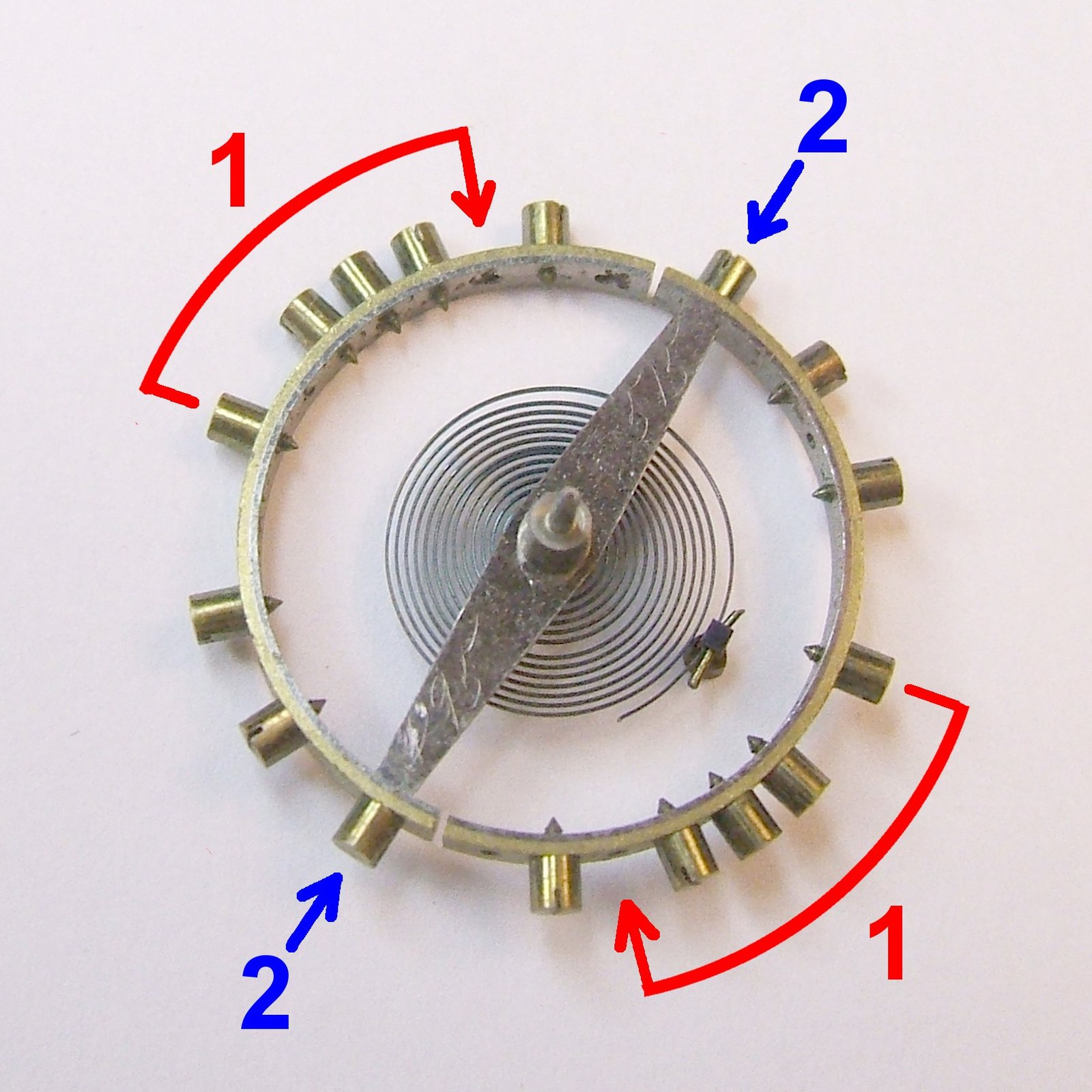
The escapement gets the attention, but it does not keep time. It only keeps something else going. The part that actually measures time in a mechanical watch is a small wheel and a coiled spring: the balance and the hairspring. Together they are the watch's heartbeat, and almost everything a watchmaker does during regulation is about making that heartbeat steady.
A wheel and a spring
Picture a small wheel on an axle, with a flat spiral spring fixed to the axle at the inner end and to the watch frame at the outer end. Turn the wheel a little and the spring coils tighter and pulls it back. Let go, and the wheel swings past its rest point, the spring uncoils and pushes it back the other way. Left alone, it swings back and forth like a pendulum lying on its side.
Each swing takes the same time, set by just two things: how heavy the wheel is and where that weight sits (its inertia), and how stiff the spring is. A heavier rim, or weight further from the centre, slows it down. A stiffer spring speeds it up. That is all regulation is: adjusting one or the other.
The balance spring arrived in the 1670s. Robert Hooke and Christiaan Huygens both claimed it. Hooke probably had the idea first, and Huygens built the first working watch with one. It made watches dramatically better almost overnight, from errors of many minutes a day to a few.
Beats and frequency
Watch people talk about frequency in vibrations per hour. One vibration is a single swing in one direction, so two vibrations make a full back-and-forth oscillation. Common figures are 18,000, 21,600, 28,800 and 36,000 vibrations per hour, or 2.5, 3, 4 and 5 Hz. A faster balance is harder to disturb with a knock or a twist of the wrist, but it uses more energy and wears its oil faster. Most modern watches settle on 28,800 or 21,600.
Isochronism, in plain words
"Isochronous" means "equal time". For a balance, it means each swing takes the same time whether the swing is big or small.
That matters because the push the balance gets is never perfectly constant. The mainspring pushes harder when fully wound than when nearly run down. Oil thickens as it ages. Wearing the watch, setting it down, and the position it lies in all change how much energy reaches the balance. If the balance's timing depended on how far it swung, every one of those changes would show up as gained or lost seconds.
In theory, a perfect spring that obeys Hooke's law, with a pull exactly proportional to how far it is wound up, gives perfect isochronism. Real springs and real watches fall short in a few ways. A plain flat spiral does not breathe evenly. As it opens and closes, its coils bunch up on one side, pushing the balance pivots sideways and changing the timing slightly. The escapement disturbs the balance a little every time it unlocks and gives impulse. And the regulator pins that adjust most watches grip the spring with a tiny bit of play.
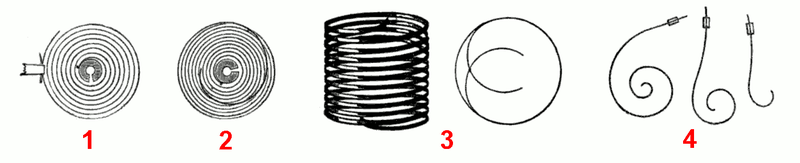
Watchmakers have spent three centuries chipping away at this. The best-known fix is the overcoil, which Abraham-Louis Breguet introduced around 1795. The outer end of the spring is raised above the rest of the coils and bent back towards the centre, so the spring opens and closes evenly around its axis. Later, Édouard Phillips worked out the mathematics of the curve. Chronometer makers went further and used helical springs, coiled like a cylinder, for the same reason.
Amplitude: the number to watch
Amplitude is how far the balance swings from its rest position, measured in degrees. Put a watch on a timegrapher and amplitude is one of the three numbers you get, along with rate and beat error.
As a rough guide, a healthy modern watch, fully wound and lying dial up, shows somewhere around 270 to 310 degrees. Hanging crown down, a bit less. After a day off the wrist, a bit less again. Those figures vary between movements, so watchmakers compare against what that particular calibre should do.
Amplitude matters for three reasons.
First, it is a health check. A balance swings wide when energy flows freely from mainspring to escapement. Low amplitude usually means something is soaking up that energy: dried oil, a worn pivot, a weak mainspring, dirt in the train. Amplitude that drops sharply once the watch is turned on its side often points at a pivot or jewel problem.
Second, it is linked to isochronism. Because no balance is perfectly isochronous, the rate drifts as amplitude changes. A watch that holds a steady amplitude across its power reserve and through different positions will keep steadier time.
Third, too much is bad as well. If the balance swings so far that the impulse pin comes round and strikes the outside of the fork, the watch "knocks", or rebanks. It gains time suddenly, and the knock can be heard and seen on a timegrapher. It is rare in a healthy watch but can happen with an overly strong mainspring.
Heat, cold and magnetism
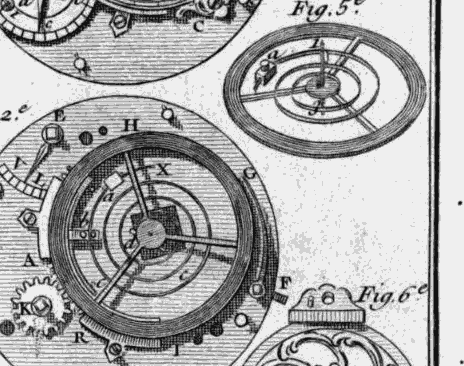
A steel hairspring gets weaker as it warms up, so early watches ran slow in summer. For a century and a half the answer was the split bimetallic balance, like the one at the top of this page, whose rim curls inward as it warms to make up the difference. Early in the twentieth century Charles-Édouard Guillaume developed nickel-steel alloys, including Elinvar, whose stiffness hardly changes with temperature. Guillaume won the Nobel Prize in Physics in 1920 for this work on alloys. Modern hairsprings use descendants of those alloys, or silicon, which also resists magnetism.
From the bench
When a customer says their watch "runs fast", the first thing a watchmaker looks at is often not the rate but the amplitude. A good rate with poor amplitude is a watch that happens to be right today. A good amplitude with a poor rate is usually a five-minute adjustment. Regulation only works on a balance that has a healthy swing to begin with.
Gallery
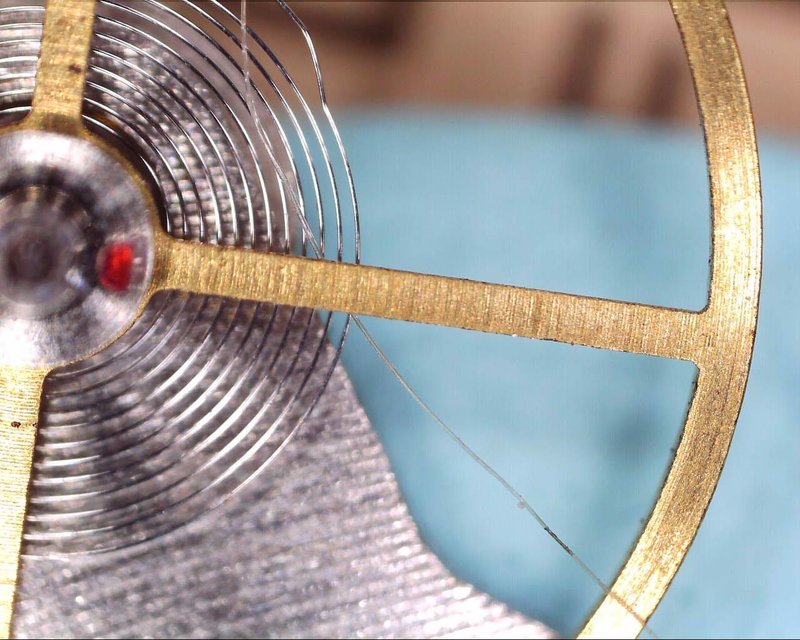
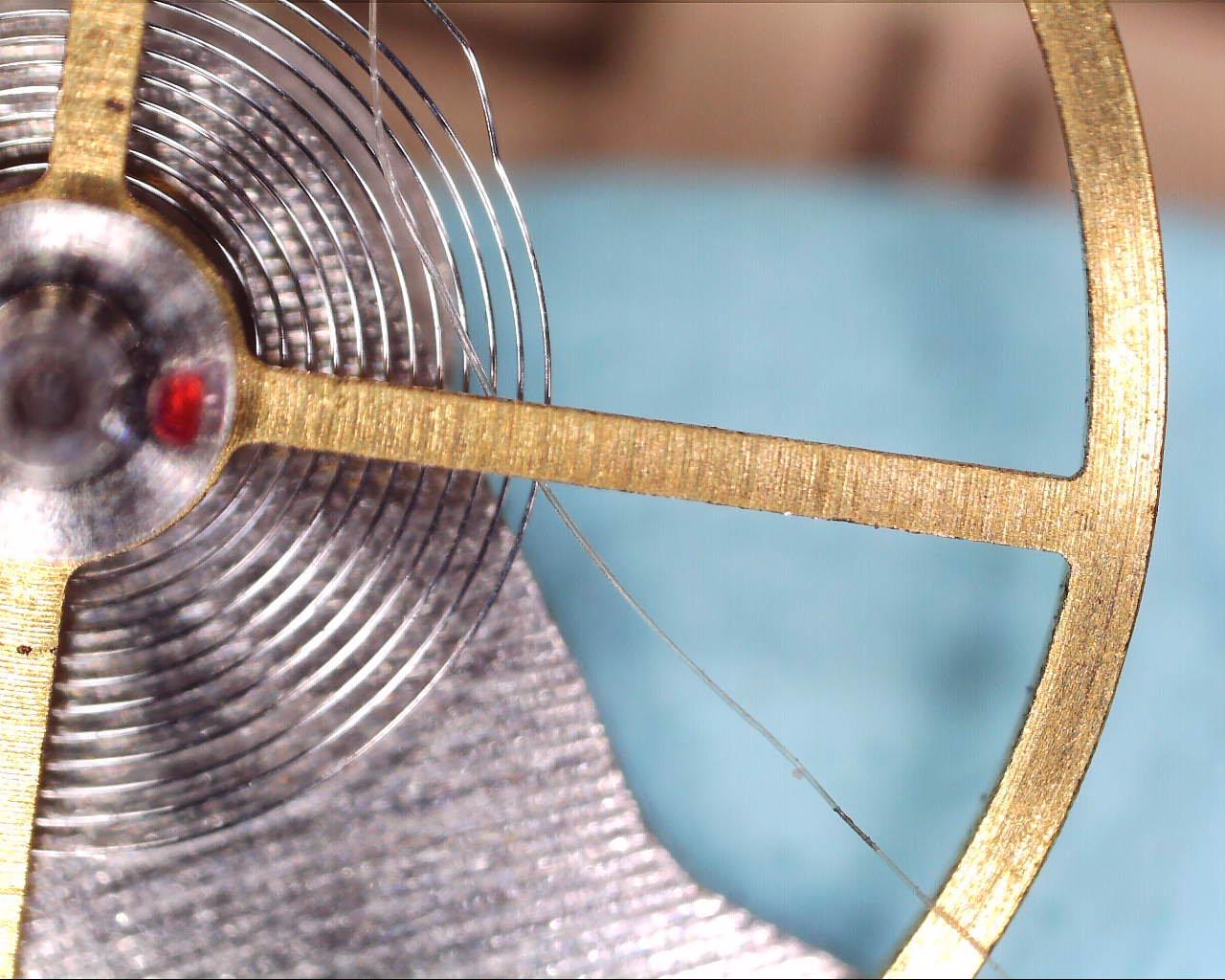
A hairspring next to a human hair. The spring's strip is thinner still. Photo: Sandbachfizzy · CC BY-SA 4.0 · Wikimedia Commons

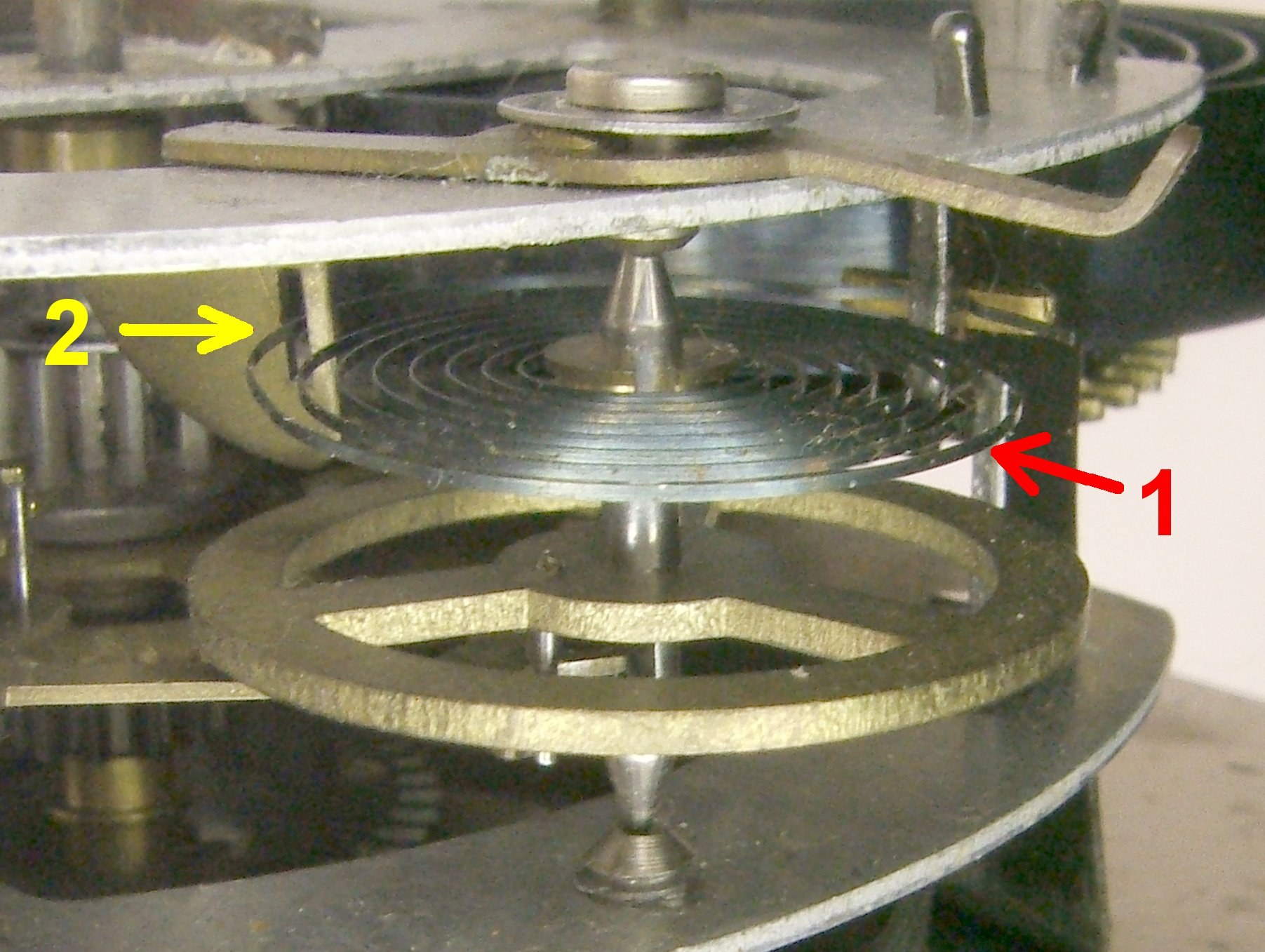
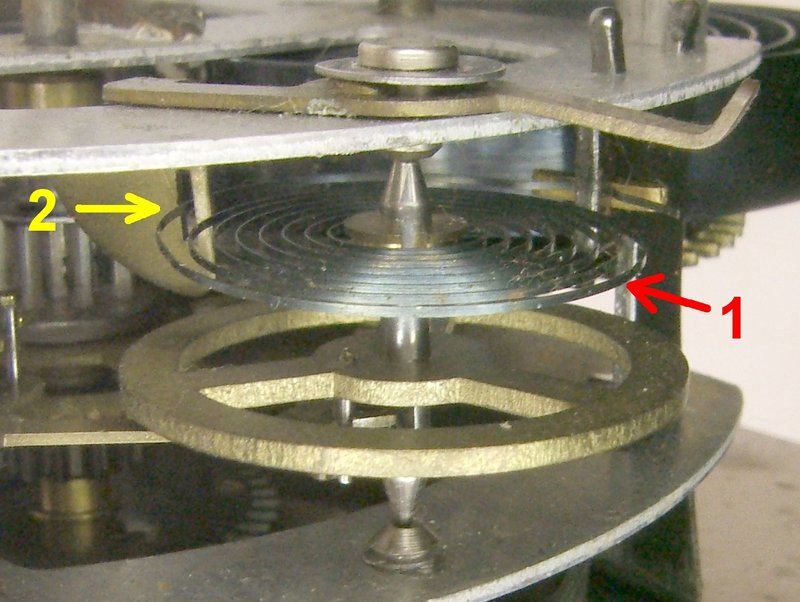
The balance of a 1950s alarm clock. Arrow 1 marks the hairspring, arrow 2 the regulator that shortens or lengthens it. Photo: Chris Burks (Chetvorno) · Public domain · Wikimedia Commons

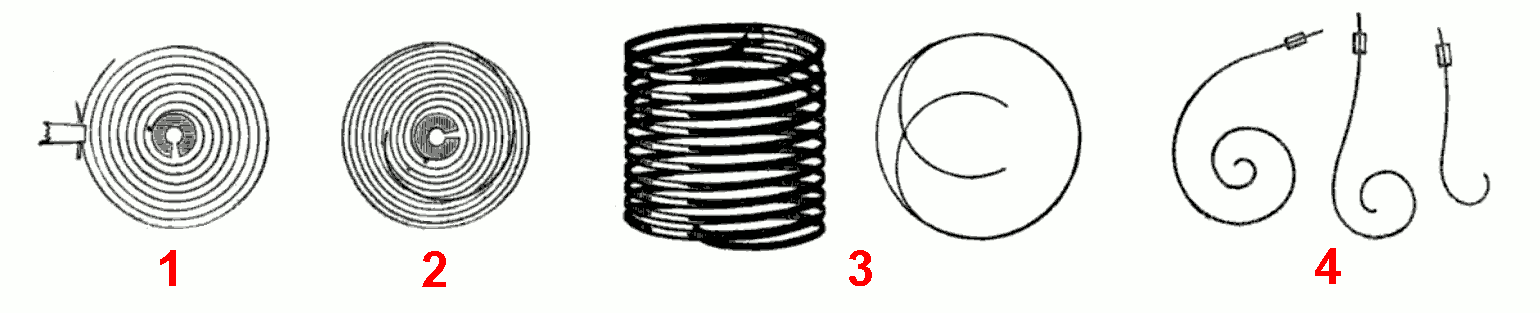
Balance spring types from Britten's handbook, including the flat spiral, the overcoil and the helical chronometer spring. Engraving: F. J. Britten and H. L. Nelthropp · Public domain · Wikimedia Commons

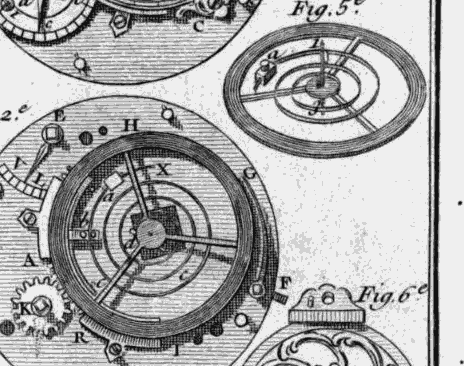
An early watch balance and spring, engraved for Ferdinand Berthoud in the eighteenth century. Engraving: Ferdinand Berthoud · Public domain · Wikimedia Commons

Sources
- F. J. Britten, The Watch & Clockmakers' Handbook (1881), archive.org
- Claudius Saunier, Treatise on Modern Horology in Theory and Practice, archive.org
- Wikipedia: Balance spring and Balance wheel
- Nobel Prize: Charles Édouard Guillaume, Physics 1920