No regulator, no drift: Fortis takes a free-sprung balance into a tool chronograph
The new Fortis Werk 17 TR swaps the regulator index for screws on the balance rim. A plain-English look at why that matters, and what it means for a watchmaker.
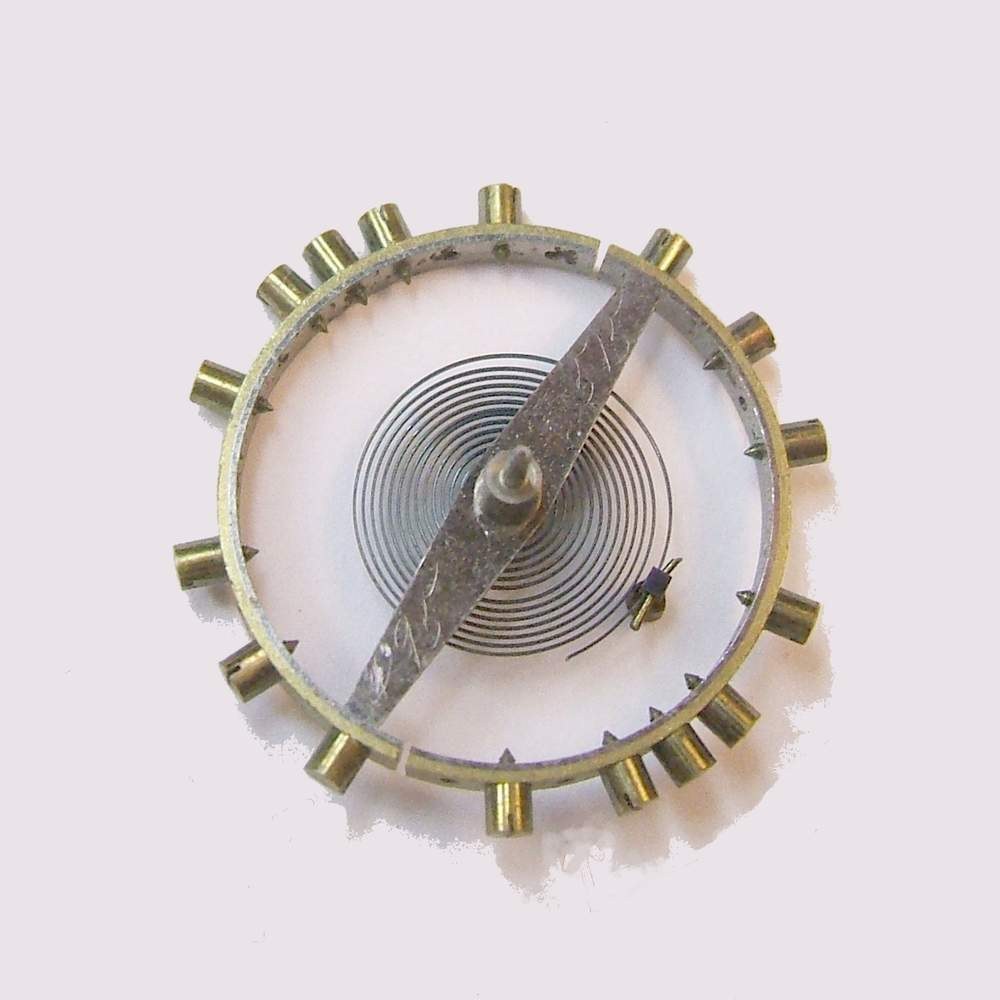
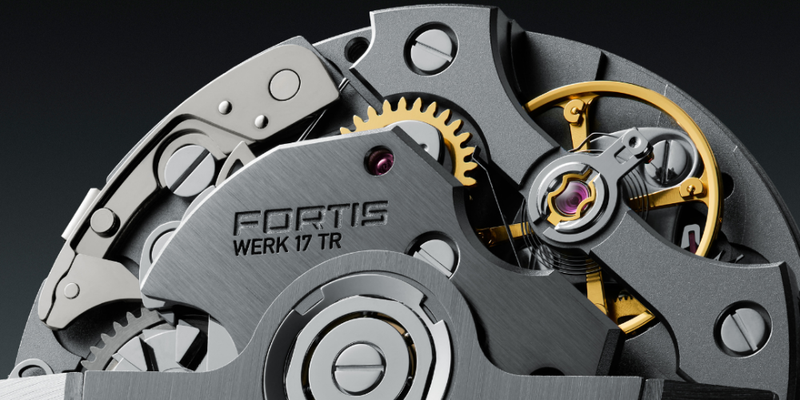
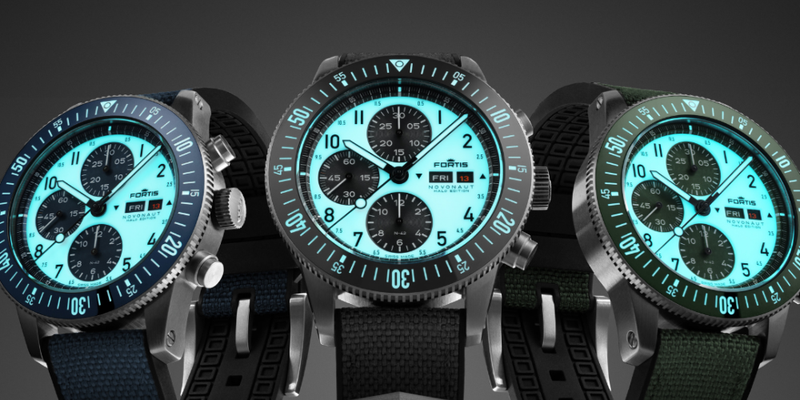
Fortis's new Novonaut N-42 Halo chronographs will mostly be talked about for their glowing dials. For anyone who works on movements, though, the more interesting news is underneath: an updated calibre, the Werk 17 TR, which drops one of the most familiar parts of a mechanical watch, the regulator.
How most watches are regulated
In the majority of mechanical movements, the rate (whether the watch runs fast or slow) is adjusted with a small lever called the index, or regulator. Two tiny pins at its end hold the outer coil of the hairspring. Move the lever one way and the pins slide along the spring, shortening the part that is free to flex, so the balance swings faster. Move it the other way and the watch slows down.
It's quick and easy, which is why it's everywhere. But it has known weaknesses. A hard knock can nudge the index and change the rate. And because the pins touch the spring, they interfere a little with how it "breathes", especially as the amplitude changes.
What free-sprung means
In a free-sprung movement, nothing touches the hairspring except its two fixed ends. Its active length never changes. To adjust the rate, the watchmaker instead changes the balance wheel: small screws or weights on the rim are turned in or out, which moves mass closer to or further from the centre. It's the same principle as a figure skater pulling in their arms to spin faster. Less inertia means a faster swing, and more inertia a slower one. This is called variable-inertia regulation.
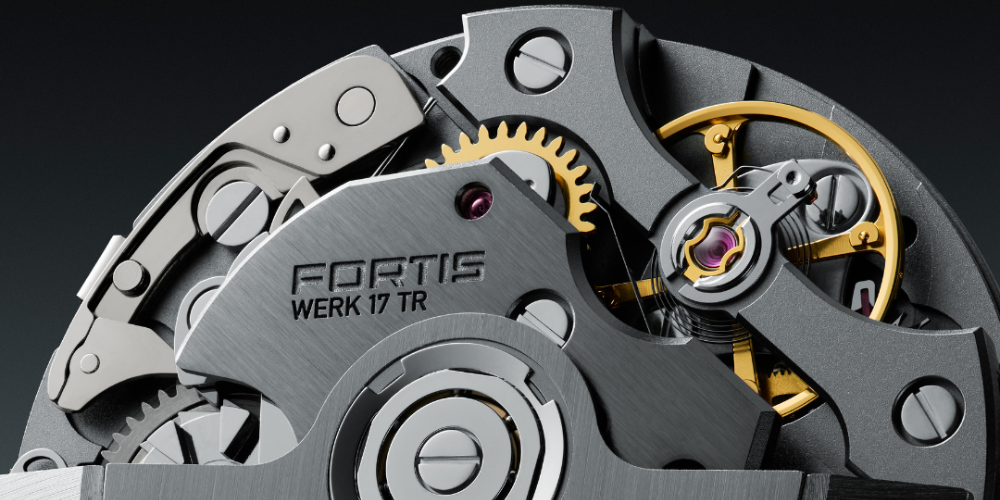
According to both Fortis and WatchTime, the Werk 17 TR uses exactly this system, with mass screws on the balance rim. The balance is also held by a bridge screwed down at both sides rather than a cock fixed at one end, which Fortis says makes it more resistant to shocks and vibration. The movement is an automatic column-wheel chronograph with day and date, beating at 4 Hz, and its power reserve rises from 60 to 70 hours compared with the earlier Werk 17. Fortis says it developed the calibre family with La Joux-Perret.
The trade-off, from the bench
None of this is new in principle. Free-sprung balances have long been used in high-end watchmaking. It is rarer in a tool chronograph at this level, which is the point Fortis is making.
The benefit is stability. With no index to drift, the rate you set at the bench is more likely to be the rate you get on the wrist months later.
The cost shows up at service time. With a regulator, a small correction takes seconds: open the caseback, nudge the lever, check the timegrapher. With a free-sprung balance, each adjustment means turning tiny screws on the balance itself, symmetrically so the balance stays in poise, and often removing the balance to do it. That takes more time, better tools and a steadier hand. It's a good example of a design choice that helps the owner and asks more of the watchmaker.
Why it's worth knowing
Next time you see "free-sprung" in a spec sheet, it tells you something concrete. The watch is built to hold its rate over time rather than to be easy to tweak, and whoever services it will need the skills and the patience for it.
Gallery
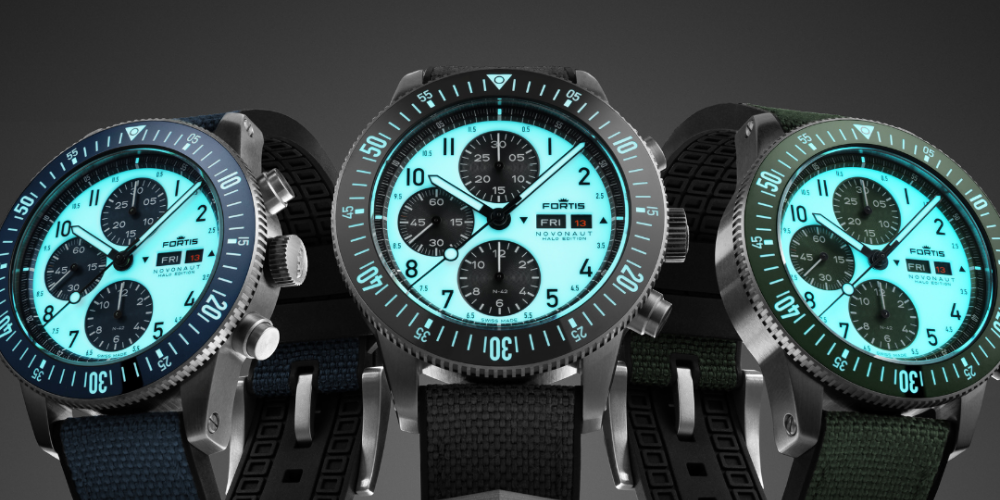
Specifications: Novonaut N-42 TR
| Case | |
|---|---|
| Material | Recycled stainless steel |
| Diameter | 42 mm |
| Height | 15 mm |
| Lug to lug | 51 mm |
| Water resistance | 200 m (20 atm) |
| Crystal | Sapphire, anti-reflective both sides; smoked sapphire case back |
| Bezel | Bidirectional ceramic Sirius bezel with Super-LumiNova® X1 |
| Dial | |
| Dial | Lumicast® X1 base with contrasting black subdials |
| Movement | |
| Calibre | Werk 17 TR, manufacture |
| Type | Automatic |
| Functions | Column-wheel chronograph, day-date |
| Regulation | Variable inertia; two-point balance fixation; chronometer |
| Power reserve | 70 hours |
| Strap | |
| Strap | Hybrid FKM rubber and textile; steel pin buckle |
Specifications per brand: Fortis, Novonaut N-42 TR.
Sources
- Fortis: Novonaut N-42 TR
- Fortis: Movements
- WatchTime: The Dial as Light Source: Fortis Unveils the Novonaut N-42 Halo